
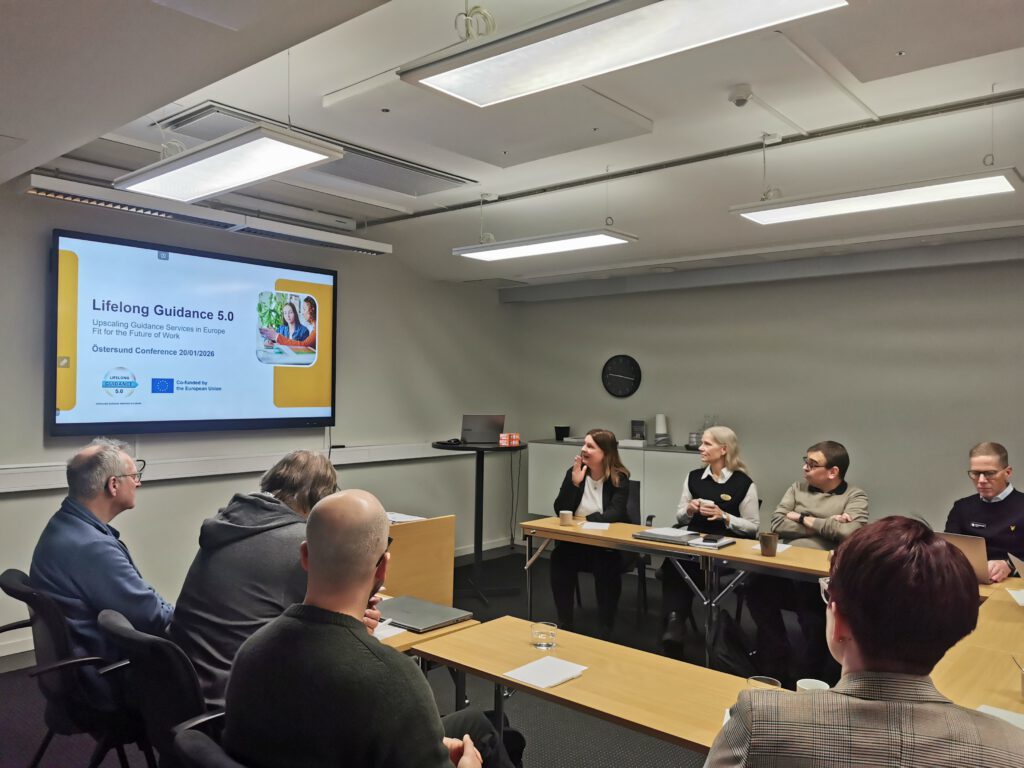
From 20 to 21 January 2026, partners of the Lifelong Guidance 5.0 project convened in Östersund, Sweden, for a two-day conference focused on the digital transformation of career guidance. The event brought together project partners, student counsellors, and industry representatives to exchange experiences and gain insights into guidance and learning systems. The conference provided an important platform for peer learning, reflection and collaboration on innovative approaches to guidance in a digitalised world.
Guidance in the Digital Era
The conference opened with a presentation from Andrea Bernert-Büerkle (VHS Baden-Württemberg), who introduced the project and its Erasmus+ Cooperation Partnership framework. Highlighting the project’s objective to enhance guidance services during the digital transition, preparing counsellors and learners to navigate an increasingly digitalised labour market.
Industry partnerships were emphasised as a key component of the project, particularly the collaboration with Johan Burger Hyllermark from Regional Industrial Development Centre (IUC). These partnerships aim to bridge the gap between education and employment, ensuring that guidance services respond effectively to labour market demands. As Bernert-Büerkle stated: “Many people need education to prepare for a job, so we need to have work in mind.”
Tools and Training for Future-Focused Guidance
A major focus of the conference was the presentation of digital tools and innovative approaches for career guidance. Participants explored SkillLab technology, EU job taxonomies and AI-supported competence profiling to strengthen connections between education, skills and labour market opportunities. Bernert-Büerkle highlighted the project’s emphasis on long-term impact and the ongoing relevance of counsellors’ human skills: “We get a lot of questions about when will student counsellors disappear? Our answer is: Never. Because they have all of the soft skills.”
The conference also introduced modular trainings designed to gather counsellors’ perspectives and address challenges in supporting students with complex guidance needs. Swedish student counsellors contributed insights from practice, highlighting multi-layered approaches to guidance.
Strategies for Learner-Centred Guidance
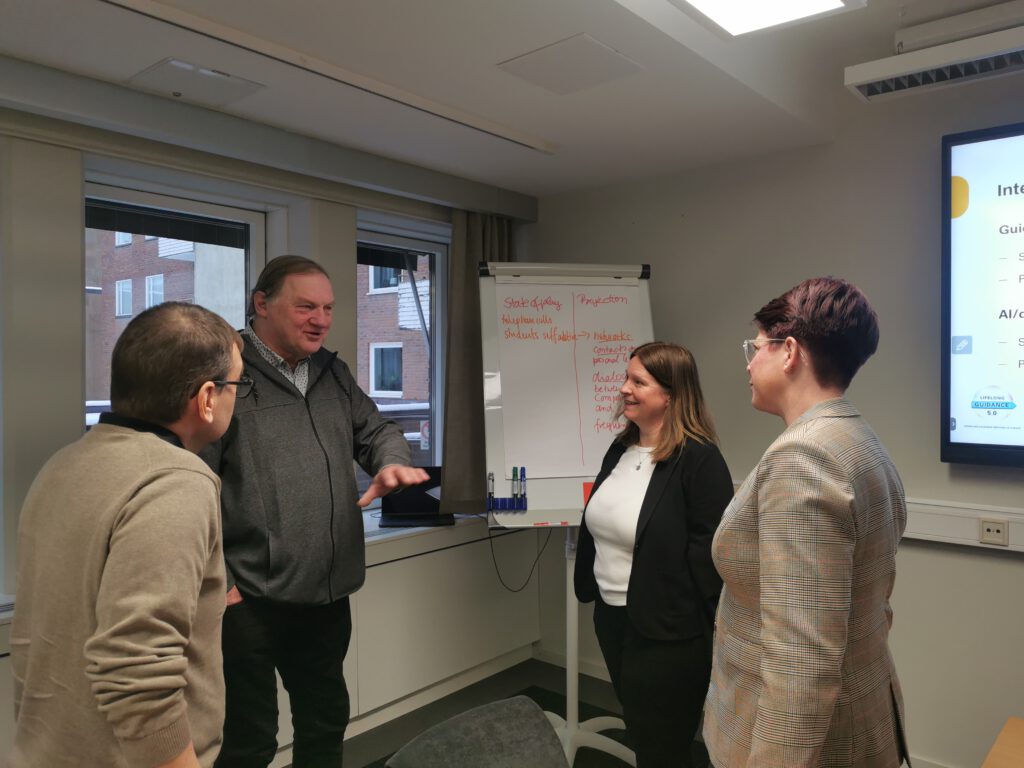
The second part of the conference explored digital strategies, methods and tools in mediatized career guidance. Discussions focused on the state of play across regions and projections for future guidance tools, emphasising:
- Networking through personal contacts to foster collaboration
- Promoting learner autonomy through initiatives, tandems and mentorship
- Focusing on mindset alongside skills development
- Placing learners at the centre of guidance activities
Practical Insights from Study Visits
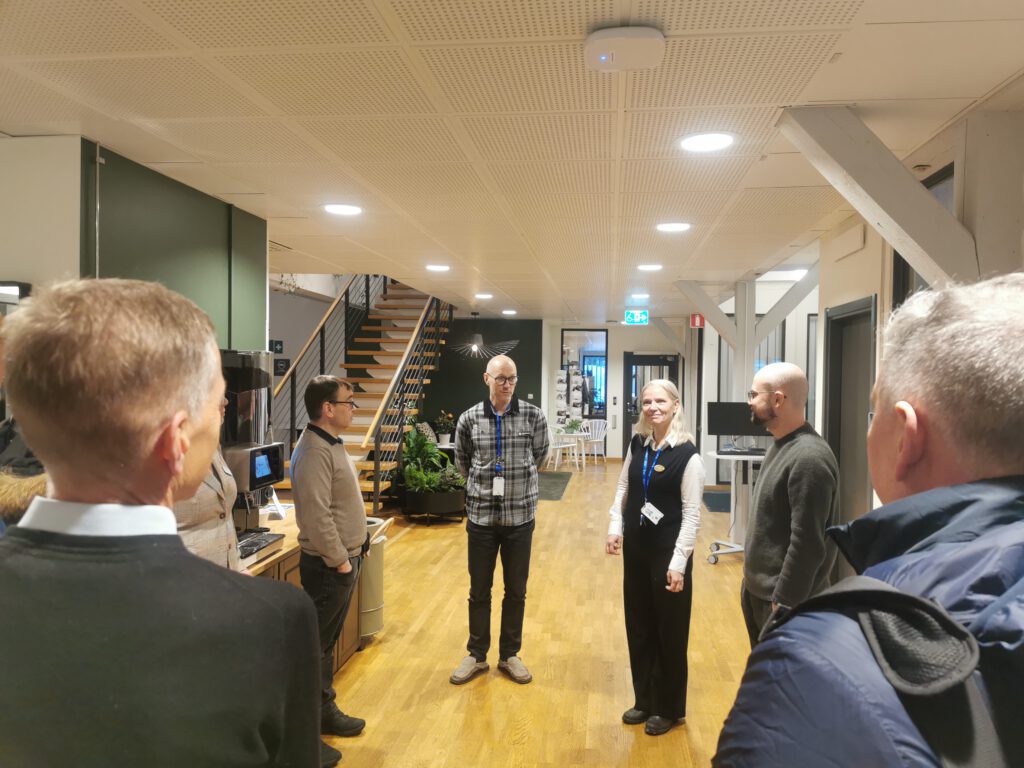
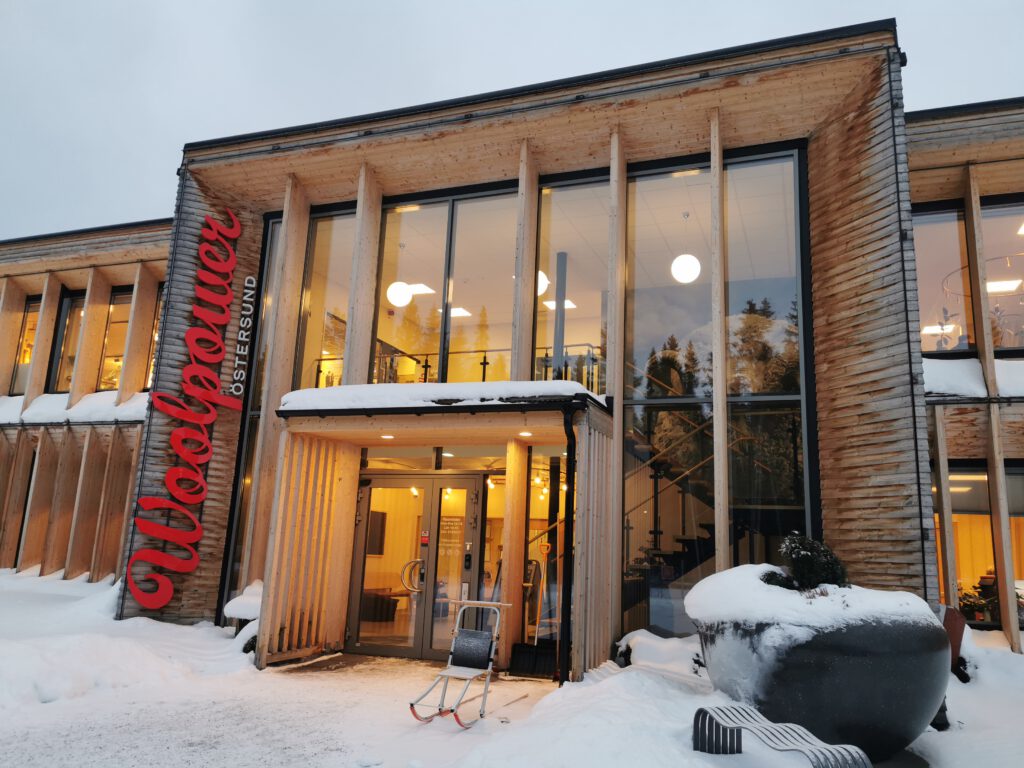
Participants visited Lärcentrum in Östersund, showcasing how soft values contribute to inclusive learning spaces, and Woolpower, a company offering workforce transformation and training opportunities. These visits demonstrated practical applications of Lifelong Guidance 5.0 approaches and illustrated the relevance of project outputs for both education and industry contexts.
Project Updates and Upcoming Activities
The conference also provided project updates and discussed how guidance models can be transferred to company contexts across Lifelong Guidance 5.0 regions. Upcoming project activities include:
- European online learning environment and webinars, such as the Lunchtime Talks, with the next session in February focusing on meta-competences.
- Lifelong Guidance 5.0 Conference in Vienna (23–24 March 2026), hosted by VHS Vienna under the theme Lifelong Challenges: Transformations in Career Guidance and Counselling. The programme will feature presentations from research institutes, interactive discussions with experts, and a Knowledge Café to explore emerging trends.
The Östersund conference reaffirmed the Lifelong Guidance 5.0 project’s commitment to supporting guidance counsellors in a digitalised world, fostering inclusive, learner-centred, and future-ready guidance systems across Europe, creating innovative sessions to exchange knowledge and the international state of play across regions.