
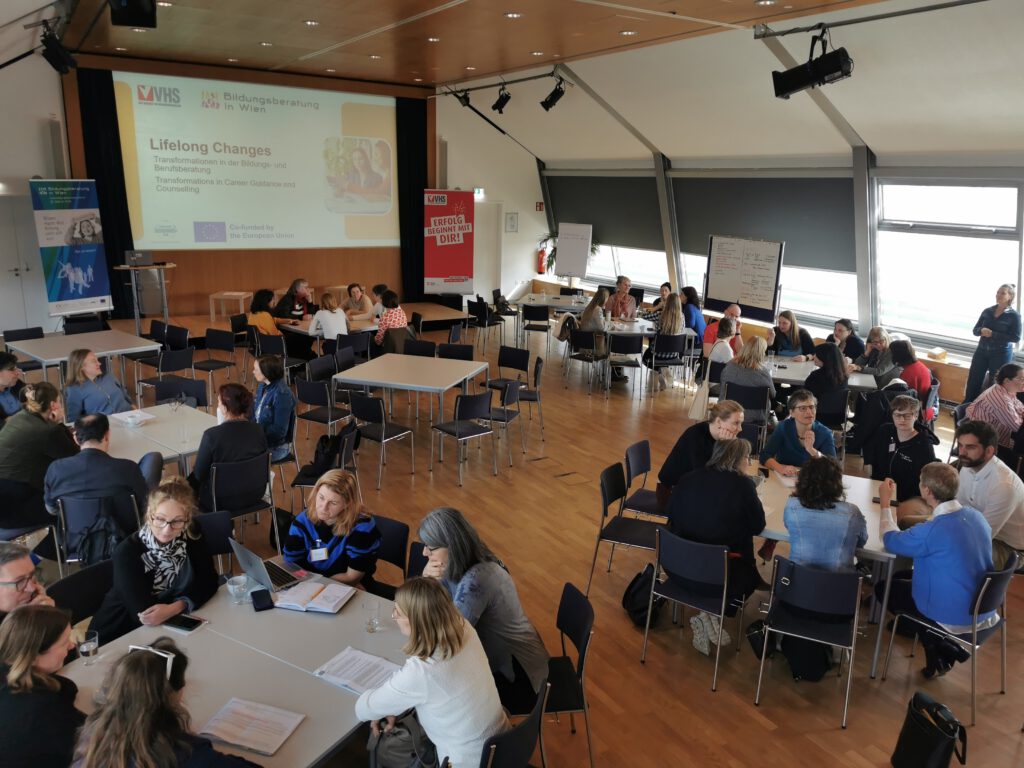
On 23–24 March 2026, “Lifelong Guidance 5.0: Upscaling Guidance Services in Europe” held its conference “Lifelong Changes: Transformations in Career Guidance and Counselling” at VHS Wiener Urania in Vienna, organised by VHS Vienna.
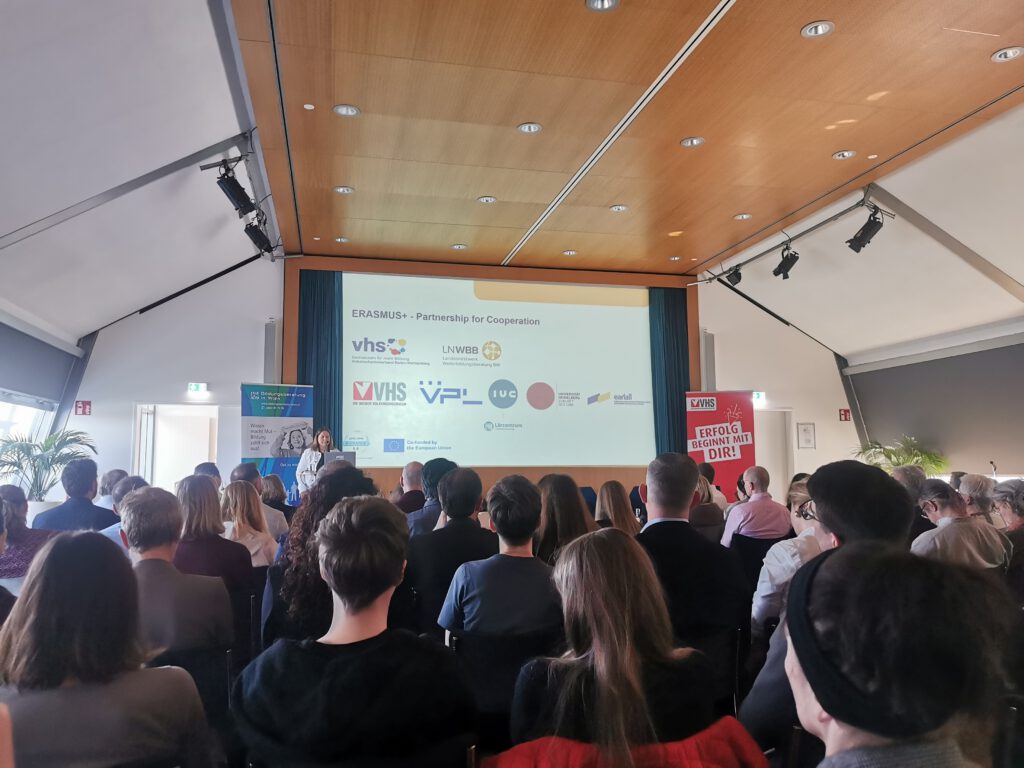
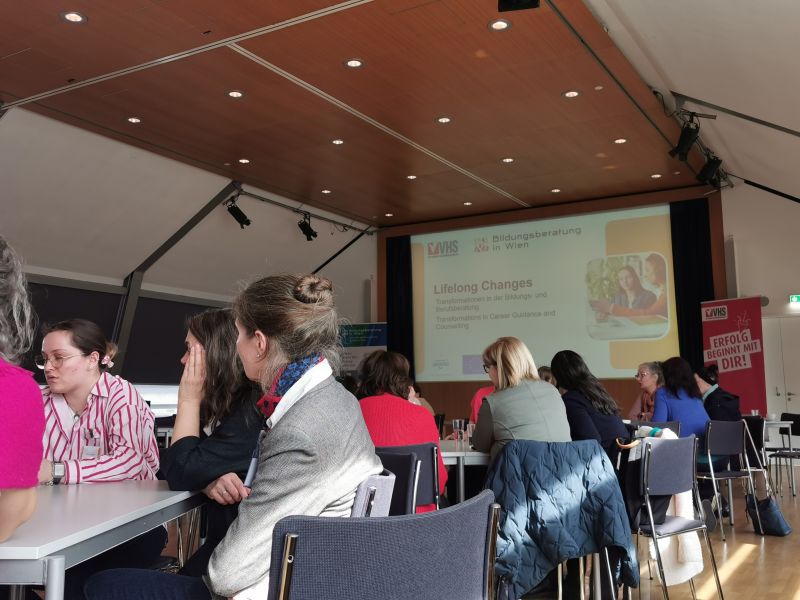
The event brought together project partners, guidance practitioners, policymakers, and experts from across Europe to explore how career guidance can evolve in response to rapid labour market changes, digitalisation, and increasing societal complexity.
Setting the scene: lifelong learning in times of change
The conference opened with welcoming remarks from Daniela Ecker-Stepp, Director of VHS Wiener Urania, who highlighted Vienna’s strong commitment to quality education and lifelong learning.
In the opening keynote, Marko Miloradović, CEO of the Vienna Employment Promotion Fund, addressed key societal challenges, emphasising the role of lifelong learning in responding to demographic change and supporting those furthest from the labour market. He also pointed to the rapid pace of technological development—particularly artificial intelligence—and the uncertainty it creates. While acknowledging these concerns, he encouraged a forward-looking approach, stressing the need to safeguard social systems while ensuring that innovation benefits everyone.
Strengthening guidance through innovation and collaboration
Andrea Bernert-Bürkle (Volkshochschulverband Baden-Württemberg – project coordinator) presented the Lifelong Guidance 5.0 project, outlining its ambition to strengthen guidance services across Europe. The project focuses on equipping counsellors with competences in digital tools, innovative guidance methods, and labour market intelligence, enabling them to better support individuals navigating increasingly complex education and career pathways.
She also highlighted upcoming project activities, including training sessions in Brussels on knowledge management and artificial intelligence in career guidance (10–11 June 2026), organised in connection with the EARLALL 25th Anniversary celebration.
Building on this, Dr. Britta Matthes (Institute for Employment Research, Germany) delivered a keynote on how digitalisation is transforming professions. She emphasised that jobs are evolving rather than disappearing, while noting that many guidance-related tasks are increasingly supported by digital tools, including AI-based platforms.
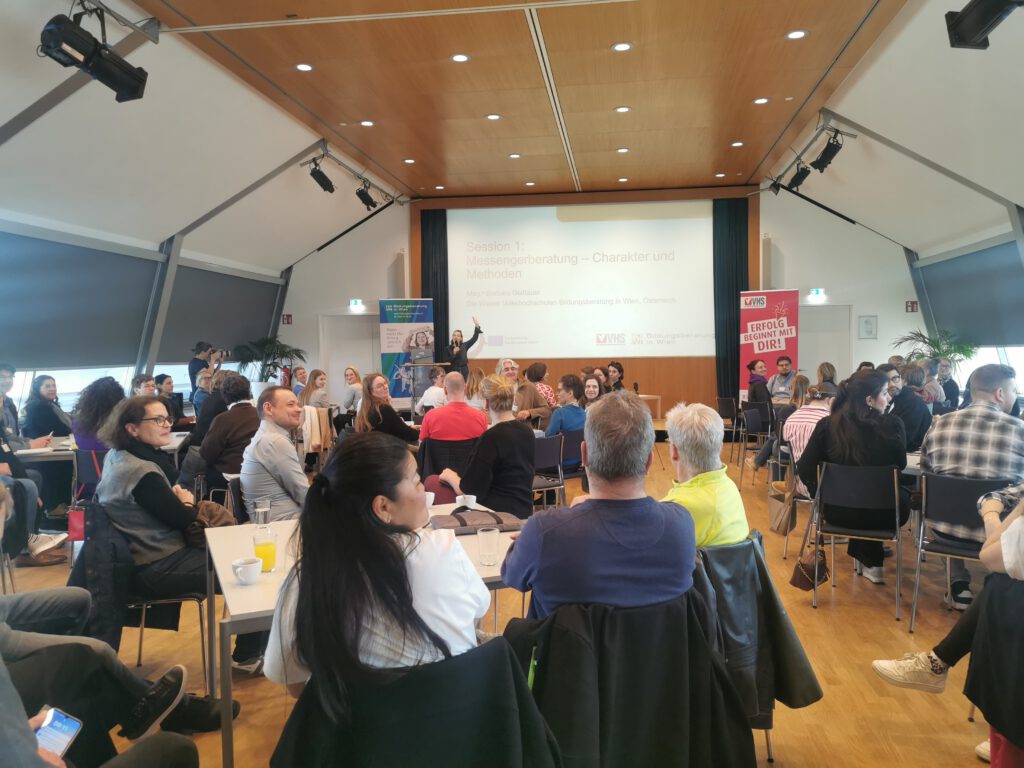
Addressing challenges through dialogue
A panel discussion brought together policymakers and experts to reflect on how these transformations are affecting guidance systems and services. Particular attention was given to the challenges faced by vulnerable groups and the role of guidance in supporting inclusion.
Key themes included:
- The uncertainty experienced by guidance professionals in relation to AI
- Strategies to better reach and support vulnerable populations
- Supporting women returning to the labour market
- The role of apprenticeships in youth integration
- The importance of language development for inclusion
From discussion to practice
The second day focused on interactive sessions and practical approaches.
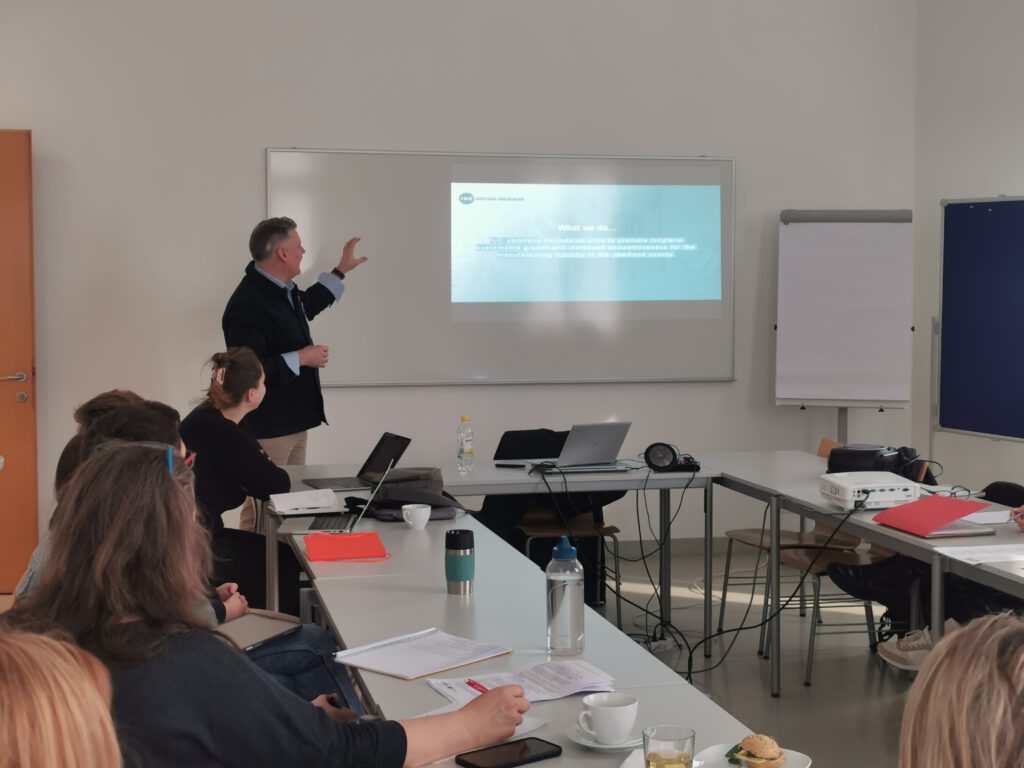
Johan Bürger Hyllienmark (IUC Jämtland Härjedalen) presented methods to identify and address skills gaps in the manufacturing sector, highlighting the importance of regional and local ecosystems. He introduced the Swedish Industrial Validation method, which promotes lifelong learning, trust, and collaboration to overcome challenges such as language barriers.
Kristín Erla Thráinsdóttir (Mímir, Iceland) presented competence assessment practices from adult education and lifelong learning centres. She demonstrated how individual-centred approaches can make skills more visible, strengthen confidence, and support career development, while fostering cooperation between stakeholders.
Counselling in uncertain times: training for the future
Following the conference, participants took part in two days of specialised training.
On 25 March, Prof. Dr. Peter Weber (University of Applied Labour Studies) explored how knowledge management can support decision-making in career counselling. Participants examined tools and methods to structure information, update their expertise, and strengthen professional networks.
The final training day, led by Stefan Kühne (e-beratungsjournal.net), focused on the role of artificial intelligence in guidance. Participants explored how AI can support counselling processes while complementing the human dimension, including how to respond to clients increasingly using AI tools for career-related questions.
Looking ahead
Combining expert insights, policy dialogue, and practical training, the conference highlighted the central role of career guidance in navigating digitalisation, demographic change, and labour market transformation. It provided a valuable platform for knowledge exchange and collaboration across Europe.